Riding Tips: How to Turn On a Motorcycle
Last Updated: June 5th, 2026
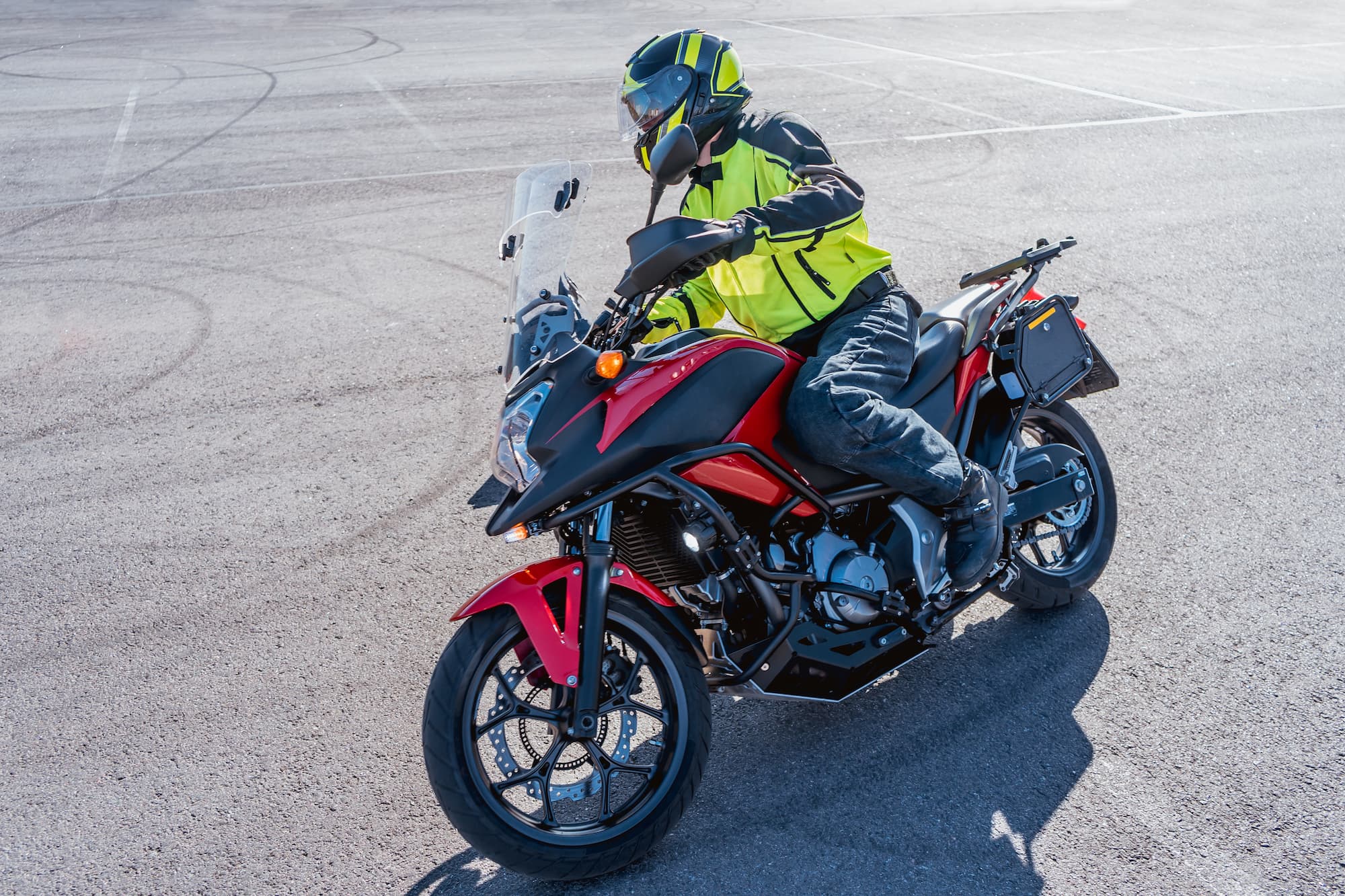
Turning safely on a motorcycle initially comes down to a rider identifying which technique is the better technique to use between counterweighting and countersteering. Riders who attend the Basic RiderCourse are introduced, often for the very first time, to the understanding that there are two different types of techniques for turning a motorcycle. Which technique gets used depends upon several variables; however, to simplify matters, we can break it down to this:
- To Turn a Motorcycle below roughly 12 mph, use COUNTERWEIGHTING
- To Turn a Motorcycle above roughly 12 mph, use COUNTERSTEERING
Once the correct technique is identified, the rider needs to implement the proper body position, smooth use of the controls, and keep their eyes focused through the turn. This guide from TEAM Arizona shares practical tips to help riders build better control and confidence when navigating turns, especially at slow speeds where precision and balance are key.
The Fundamentals of Motorcycle Turning (aka cornering) at Real World Speed
At its core, a motorcycle changes direction based on how you manipulate the handlebars and where you distribute your weight. At higher speeds, say above 12mph, you use countersteering, which involves PUSHING forward the handlebars in the direction you want to go. We also adjust the body weight down and to the inside of the motorcycle. For example, if we go left, we press the left handlebar to initiate a turn and move our upper body down and in toward the left side of the bike. This alters the combined center of gravity of the rider and bike, allowing a rider to reduce the lean angle while maintaining speed.
Look Through the Turn
Regardless of the speed, you should always look in the direction you want the motorcycle to go to maintain a smooth path. You should turn your head and eyes toward the apex and exit of the turn rather than focusing on the ground directly in front of your tire. Looking through the curve lets your brain calculate just how much throttle roll-on is needed for the curve’s radius. If you stare at the pavement right in front of you, the brain has a difficult time understanding how much throttle is needed because it has a poor visual vector; thus, the bike will feel heavy and unstable.
Maintain Smooth Throttle Control
When you maintain a constant or slightly increasing radius with the throttle, the bike stays settled on its tires, giving you the traction and stability needed to complete the maneuver safely.
Techniques for Safer Slow-Speed Turns
During slow-speed maneuvering, a rider uses direct steering, meaning you turn the handlebars in the direction of the turn. Let’s take a deeper look at how the clutch-throttle-rear brake relationship is the foundation for safer slow-speed turns.
Use the Friction Zone
The friction zone is the area of clutch travel where the engine power begins to transmit to the rear wheel. Lightly engaging the clutch in this zone helps you maintain balance and precise control during tight turns. By slipping the clutch slightly, you can control your speed more accurately than by using the throttle alone, which prevents the bike from jerking or stalling.
Keep Your Body Upright While Leaning the Bike
During slow turns, you should often keep your body more upright, even leaning towards the outside of the turn, while allowing the motorcycle to lean slightly beneath you. This is called counterweighting. By shifting your weight to the outside of the turn while the bike leans inward, you keep the combined center of gravity balanced over the contact patch of the tires.
Use Light Rear Brake Pressure
Applying gentle rear brake pressure can stabilize the motorcycle during slow maneuvering. This creates a bit of tension in the drivetrain and helps settle the chassis. Unlike the front brake, which can cause the forks to dive and the bike to tip if grabbed during a slow turn, the rear brake provides a steadying effect that makes tight U-turns much easier to manage. We can even find that if we hold a steady clutch-throttle relationship, we can use the rear brake for directional control and to alter forward momentum.
Common Turning Mistakes Riders Should Avoid
Most turning problems happen because riders have poor visual direction, turn too slowly, or abuse throttle control. Identifying these habits is the first step toward fixing them. Common mistakes include:
- Looking at obstacles like curbs or parked cars instead of the path through the turn. <target fixation>
- Grabbing the front brake during a tight turn, which often leads to an immediate tip-over.<poor visual direction>
- Entering turns too quickly without planning a proper line.<riding behind the bike>
- Failing to practice slow-speed maneuvering in a controlled environment. < Repetition in a safe environment helps with motor skill acquisition>
Consistent practice in empty parking lots or riding classes can significantly improve your confidence. The more you work on these basics, the more natural they become when you are out in traffic.
Build Confidence With Professional Motorcycle Training
TEAM Arizona is a trusted resource for motorcycle rider training and safety education, having trained more than 170,000 motorcyclists. Whether you are a brand-new rider or someone looking to sharpen your skills, our Basic RiderCourse offers the perfect environment to master these techniques. For the Intro and Basic RiderCourses, we provide the bikes and the expertise so you can focus on becoming a better, safer rider.
Contact TEAM Arizona for more information, or sign up for their Basic RiderCourse today to build the confidence you need for a lifetime of riding.
Featured Image Credit: Johnny Bravoo/Shutterstock
Check out TEAM Arizona’s latest video series discussing the techniques for low speed maneuvering:
Tell us your thoughts about this article and practicing these techniques on the TEAM Arizona Facebook Page.
 Bill Seltzer has been a Motorcycle Safety Foundation RiderCoach since 2003 and a Total Control Advanced Riding Instructor since 2011. He currently serves as the Marketing Director for TEAM Arizona and is a member of the Arizona Strategic Highway Safety Planning committee. Have questions or comments about the article? Email him: Bill@MotorcycleTraining.com
Contact TEAM Arizona Today!
Phoenix Metro / East Valley: 480-998-9888
Phoenix Metro / West Valley: 623-939-9888
Prescott & Northern Arizona: 928-771-2500
Tucson / Sierra Vista / Southern Arizona: 520-733-9888
Our Locations:
Phoenix Metro Area:
Gilbert Location | GO AZ Motorcycles – Scottsdale | Harley-Davidson of Scottsdale | Glendale Community College | GO AZ Motorcycles West- Peoria | Arrowhead Harley-Davidson | Peoria RideNow Powersports | Goodyear RideNow Powersports | Chandler Harley-Davidson | Buddy Stubbs Harley-Davidson – North Phoenix | Superstition Harley-Davidson
Tuscon Metro Area:
Tucson Headquarters | Tucson RideNow Powersports | Harley-Davidson of Tucson
Sierra Vista/ Fort Huachuca:
Buena High School | Cochise Motorsports
Prescott: